




The Lawsuit That Followed the Silence: Alan Irvine, Helios Airways, and the Eight-Year Fight for Accountability
By the time the mountain swallowed the aircraft, the tragedy was already hours old.
On the morning of August 14, 2005, the sun rose gently over the Cypriot resort town of Larnaca. The Mediterranean shimmered. The streets were quiet. In a rented apartment just minutes from the runway of Larnaca International Airport, 44-year-old aeronautical engineer Alan Irvine stirred awake beside his partner, Donna. Their two young children were still asleep. It was, by all appearances, an ordinary summer morning.
By midday, 121 people would be dead.
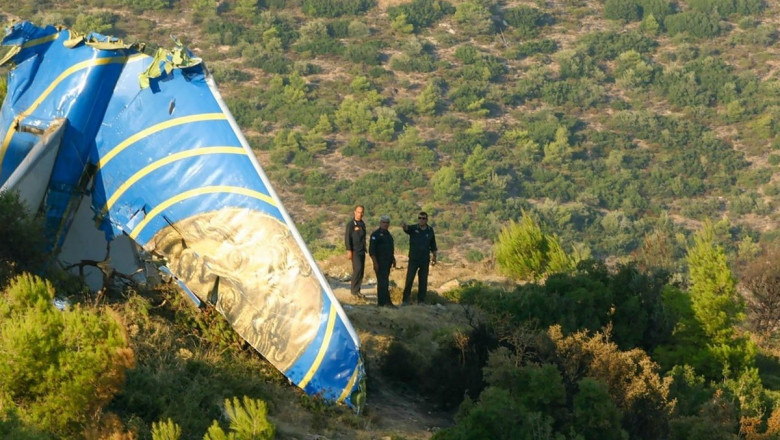
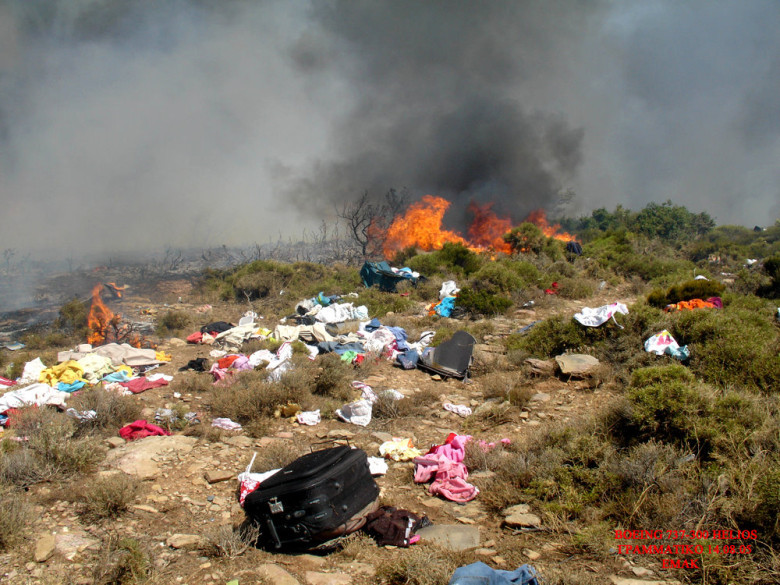
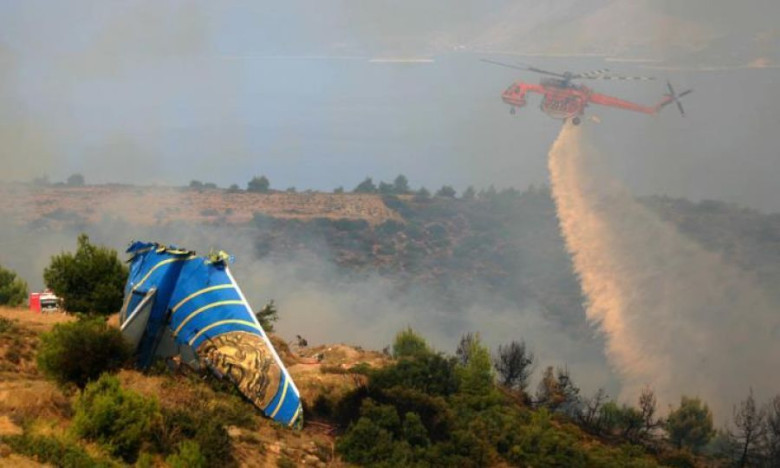
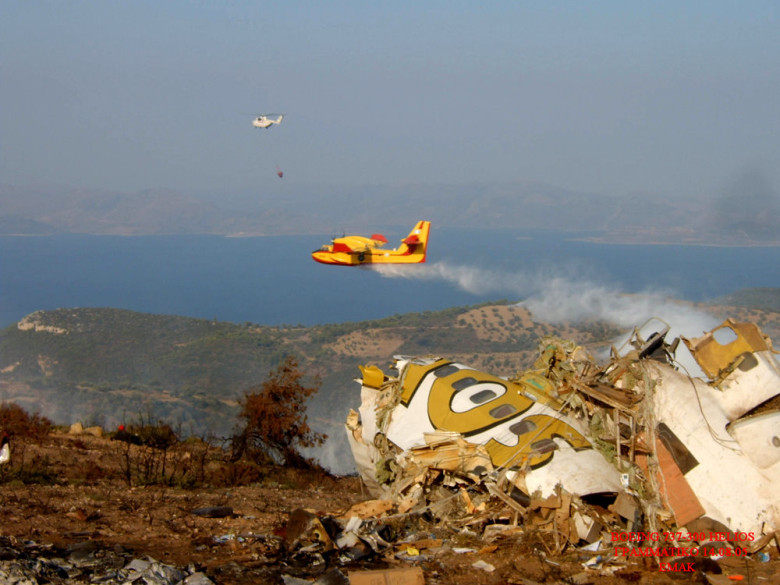
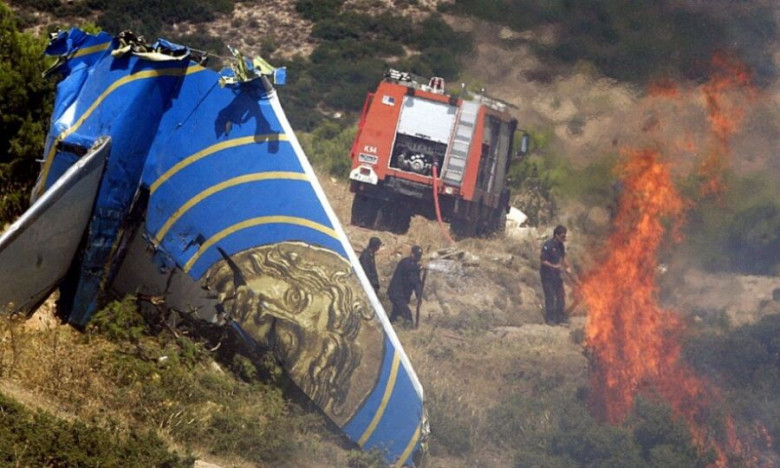
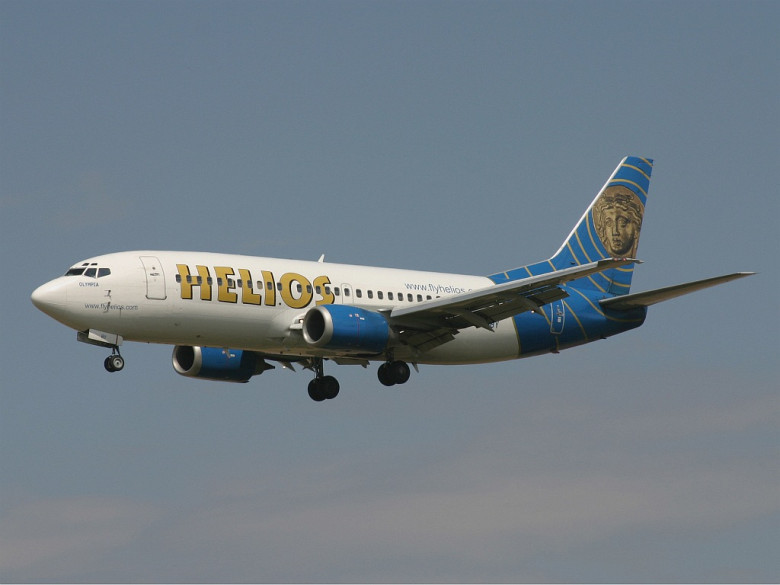
The aircraft—a Boeing 737-300 operated by Helios Airways—would slam into a mountainside near the village of Grammatiko in Greece, ending the lives of everyone on board. The flight was designated Helios Airways Flight 522. For most of the world, it would become another entry in the grim ledger of aviation disasters.
For Alan Irvine, it would become something else entirely: the beginning of an eight-year legal battle that would test the boundaries of professional responsibility, corporate accountability, and the burden borne by engineers whose signatures can shape life and death.
A Life in Aviation
Alan Irvine was not the kind of man who drifted into aviation. He belonged there.
For fifteen years, he had worked as a freelance aeronautical engineer—an itinerant professional whose skill set was in constant demand across the globe. He had inspected aircraft in China and Malaysia, supervised maintenance programs in the Middle East, consulted in Africa, Mexico, and the United States. He liked the rhythm of contract work: intense months on site, technical problem-solving under pressure, then on to the next assignment. The pay was strong. The autonomy was satisfying.
Aviation engineering is not glamorous work. It is meticulous and procedural. It is checklists, torque settings, system resets, and signatures in maintenance logs. It is responsibility measured in foot-pounds and psi.
In April 2005, Irvine signed a six-month contract with Helios Airways, the Cypriot low-cost carrier he had previously worked with in 2002. Helios was not a giant. It operated a small fleet of Boeing 737 aircraft, serving holiday routes across Europe. Like many budget airlines in the early 2000s, it functioned in a climate of tight margins and operational pressure.
Still, to Irvine, it was another assignment. Another line in the résumé. Another stretch abroad with his family in tow.
The apartment near the airport made sense. Close to work. Close to the aircraft.
Close to what would become the center of a storm.
The Morning of Flight 522
Helios Flight 522 was scheduled to depart from Larnaca, Cyprus, to Prague, with a stopover in Athens. It was a routine route. The aircraft—registered 5B-DBY—had flown many times before.
But aviation disasters rarely announce themselves with drama at the outset. They begin in silence, in oversight, in miscommunication.
That morning, the aircraft departed Larnaca at 9:07 a.m. local time. Within minutes of climbing, the cabin altitude warning horn began to sound. Inside the cockpit, confusion grew. The alarm was identical to another warning used during takeoff configuration—an auditory overlap that would later become central to investigators’ conclusions.
As the plane continued climbing, the air inside the cabin grew thinner.
Commercial aircraft are pressurized to simulate lower altitudes. Without pressurization, oxygen levels drop. Hypoxia sets in. Judgment falters. Consciousness fades.
Radio transmissions from the cockpit became increasingly strained. Air traffic controllers in Cyprus and later in Greece attempted contact. The aircraft did not respond coherently.
Greek fighter jets were scrambled as the Boeing 737 crossed into Greek airspace. What the pilots of the fighter aircraft saw was chilling: the co-pilot slumped over the controls. The captain unresponsive. Passenger oxygen masks dangling throughout the cabin.
The aircraft flew on autopilot, ghostlike, until its fuel began to run out.
At 12:04 p.m., it crashed into mountainous terrain north of Athens.
There were no survivors.
The Shockwave
When news reached Larnaca, it spread quickly. An aircraft down in Greece. A Helios plane. No survivors expected.
In the tight-knit aviation community on the island, the impact was immediate and personal. Engineers, pilots, ground crew—they all knew someone aboard.
For Irvine, the tragedy was at once distant and immediate. He had not worked on that specific flight. But he had worked on the aircraft type. He had worked for the airline. His signature was in maintenance records.
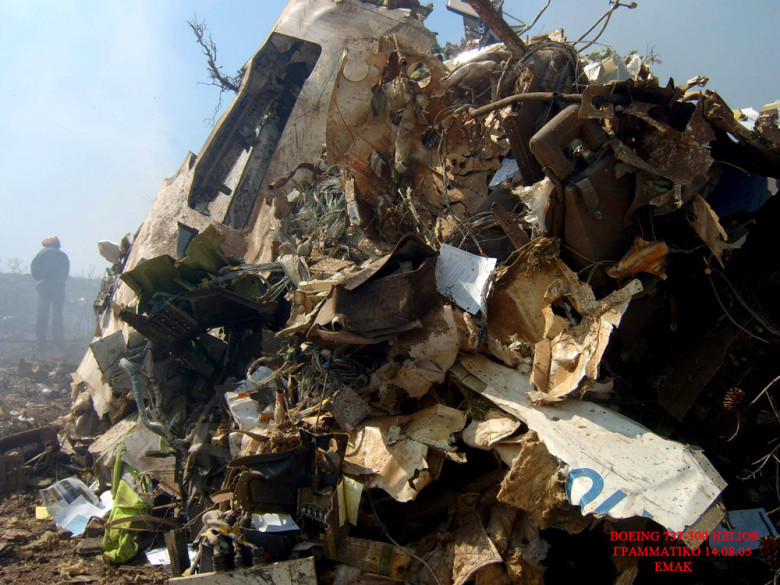
In the days following the crash, investigators began reconstructing the chain of events. The inquiry would ultimately conclude that the aircraft had not been properly pressurized before departure. A pressurization mode selector switch had been left in “manual” instead of “auto” following maintenance checks conducted the previous day.
The warning horn had sounded. The crew had misinterpreted it.
The aircraft had climbed into thin air with no automatic pressurization.
In aviation, accidents are rarely the result of a single catastrophic failure. They are cascades—small errors aligning like tumblers in a lock.
But the public appetite for complexity is limited. When 121 people die, someone must be responsible.
The Engineer in the Crosshairs
In the months after the crash, the investigation widened beyond the cockpit crew and into the airline’s operational and maintenance practices.
Maintenance records were scrutinized. Procedures examined. Sign-offs analyzed.
Alan Irvine’s name appeared in those documents.
He had been involved in maintenance checks on the aircraft prior to the accident. Specifically, the pressurization system had been tested after a reported issue with a door seal. To conduct certain ground tests, engineers set the pressurization system to “manual.”
The critical question became this: Had the switch been returned to “auto” after the test?
Investigators would argue that it had not.
And so, the focus shifted. Not just to pilots who had perished. Not just to managers in corporate offices. But to the engineer whose job it was to ensure systems were correctly configured.
In aviation, the signature of an engineer is not ceremonial. It is a declaration: This aircraft is airworthy.
For Irvine, the realization that he might bear legal responsibility for the crash was surreal.
He had not been in the cockpit. He had not flown the aircraft. He had followed procedure as he understood it. Yet now, prosecutors were building a case that would stretch across borders—from Cyprus to Greece and into the United Kingdom.
The tragedy had become a legal labyrinth.
Corporate Collapse and Legal Pursuit
In the aftermath of the crash, Helios Airways’ reputation was irreparably damaged. Public confidence evaporated. Financial pressures mounted.
Within a year, the airline ceased operations.
But the legal machinery did not dissolve with it.
Greek prosecutors pursued criminal charges against several individuals connected to the airline, including executives and maintenance personnel. The allegations ranged from manslaughter to negligence.
Irvine found himself named among the accused.
The irony was bitter: a freelance engineer who had built a career on mobility was now tethered to a drawn-out legal battle in foreign courts.
Extradition requests were filed. Hearings scheduled. Appeals lodged.
For eight years, the case wound its way through legal systems.
The Human Toll
Legal proceedings unfold in filings and transcripts. But they are lived in kitchens and living rooms.
For Irvine and his family, the lawsuit was not abstract. It was constant.
The uncertainty weighed heavily. Would he face prison? Would his professional reputation be destroyed? Would future contracts vanish under the cloud of accusation?
Engineering, especially in aviation, is built on trust. Employers must believe in your competence. Airlines must trust your judgment. Insurers must assess your risk profile.
To be charged in connection with a fatal crash is to carry a professional scarlet letter.
Friends advised him to settle. Others urged him to fight. Legal fees mounted. Media coverage ebbed and flowed, but the anxiety never fully receded.
He maintained his innocence. He argued that procedures had been followed, that responsibility lay in systemic failures rather than individual oversight.
In aviation safety, there is a concept known as the “Swiss cheese model.” Accidents occur when holes in multiple layers of defense align. Rarely is one person the sole cause.
But courts demand specificity.
A Broader Reckoning
The Helios crash forced uncomfortable questions about low-cost carriers and maintenance standards. Were cost pressures eroding safety margins? Were training protocols sufficient? Were warning systems too ambiguous?
The cockpit alarm—identical for two different warnings—drew particular scrutiny. Human factors experts examined how auditory confusion could contribute to misdiagnosis.
Regulators reviewed oversight mechanisms.
The tragedy became a case study in aviation schools worldwide.
Yet for the families of the victims, the academic analysis offered limited comfort.
And for Irvine, the broader systemic debates did little to ease his personal predicament.
The Long Road Through Court
The legal process was slow, procedural, and grinding.
Greek courts initially convicted several individuals in absentia, including airline executives. Appeals followed. Jurisdictional challenges arose.
In parallel, civil lawsuits were filed by victims’ families seeking compensation.
Irvine’s defense centered on the argument that maintenance protocols required cockpit crew verification of system settings before flight. The ultimate responsibility for aircraft configuration, he maintained, lay not solely with maintenance but also with flight crew procedures.
Moreover, the aircraft had flown multiple legs after the maintenance check without incident. If the switch had been left in manual, why had no earlier flight detected it?
The prosecution countered that the manual setting was the initiating error.
Legal battles often hinge on narrative as much as on technical detail. Was this a story of an engineer’s oversight? Or of organizational failure? Or of cockpit misinterpretation?
For eight years, the narrative remained contested.
Reputation on Trial
Beyond the courtroom, Irvine’s career hovered in suspension.
Some clients stood by him. Others hesitated. The aviation world is global but insular. Word travels.
He continued to work, but the case shadowed him.
There is a particular strain reserved for professionals whose work carries mortal stakes: surgeons, architects, engineers. When failure occurs, even indirectly, the weight is existential.
Was there something he missed? A line in a checklist? A moment of distraction?
Engineers are trained to interrogate systems. In quieter moments, Irvine interrogated himself.
Resolution and Aftermath
Ultimately, after years of proceedings, higher courts overturned certain convictions related to the crash, citing insufficient evidence of criminal negligence in some instances. The legal outcomes were complex and varied across jurisdictions.
For Irvine, the drawn-out case concluded without the catastrophic personal consequences he had feared. But vindication in law does not erase years of strain.
The Helios crash remains one of Greece’s deadliest aviation disasters. Its legacy is etched into regulatory frameworks, training manuals, and safety audits.
It also remains etched into the life of an engineer who learned, painfully, how quickly professional duty can become personal peril.
Lessons in Thin Air
Aviation is often cited as the safest mode of transportation. It is a triumph of engineering discipline and procedural rigor. Every bolt, every sensor, every checklist line represents accumulated lessons from past mistakes.
The Helios tragedy reinforced several of those lessons:
-
Warning systems must be unambiguous.
-
Human factors matter as much as mechanical reliability.
-
Organizational culture influences safety outcomes.
-
Accountability is complex in distributed systems.
It also highlighted something less discussed: the vulnerability of individuals within large technical systems. Engineers operate within frameworks—company policies, regulatory standards, economic pressures. When those frameworks fail, the search for responsibility can become intensely personal.
For readers accustomed to the polished certainty of aviation marketing—on-time departures, seamless travel—the story behind Flight 522 is sobering.
Behind every departure board listing is a network of people whose decisions intersect in invisible ways.
The Mountain Remains
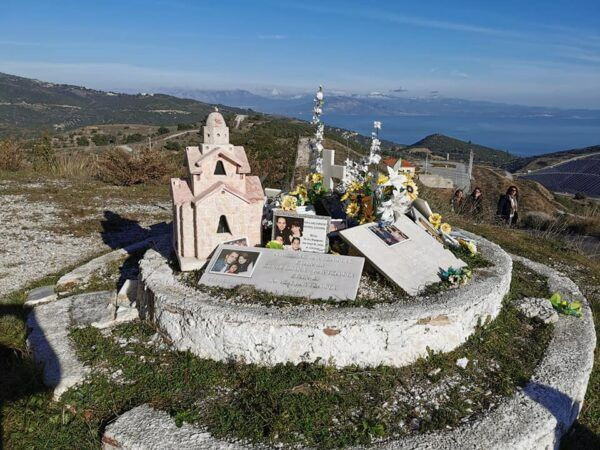
Near the crash site in Greece, a memorial stands. Names are engraved. Flowers are left. The mountain is quiet again.
For the families of the 121 victims, August 14 is not just a date. It is an absence.
For Alan Irvine, it is also the anniversary of a legal odyssey that reshaped his life.
He did not board the aircraft. He did not hear the warning horn. He did not see the mountainside rush upward.
Yet he was pulled into the catastrophe’s orbit for nearly a decade.
In the end, the Helios disaster is not only a story of mechanical settings and cockpit confusion. It is a story about how modern systems distribute responsibility—and how, when they fail, individuals can find themselves standing alone in the thin air of blame.
Aviation’s promise is built on precision. Its tragedies remind us how fragile precision can be.
And how, long after the wreckage is cleared, the consequences continue to echo—in courtrooms, in careers, and in the quiet spaces where engineers revisit the checklists of memory, line by line.














Comments
0 comment