



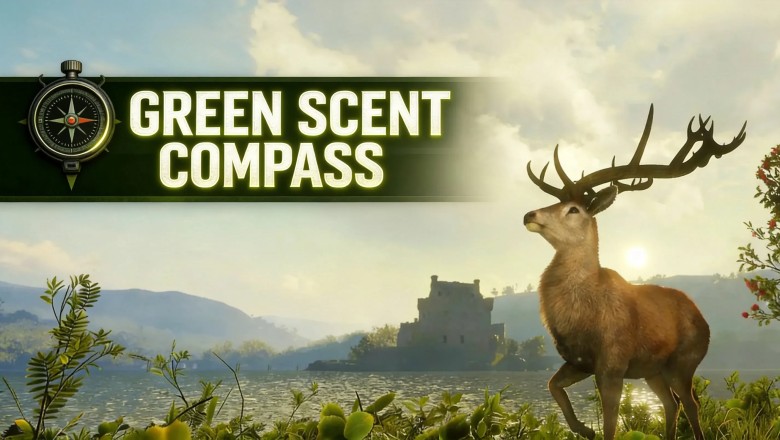

As of Patch 9.3, released on September 14, 2026, Call of the Wild's scent system remains one of the most unforgiving stealth puzzles in hunting games. A Diamond can troll a perfect 30-minute stalk in seconds: a direct upwind approach may spook a Gold, Diamond, or Great One before 150m, even when the hunter's visibility meter looks clean. In COTW, the green scent cone is the real boss, and reading it separates a clean Need Zone ambush from a botched GO attempt.
Reading the Green Cone: Wind Direction COTW Basics
Hunters should check the compass before moving. The green cone marks the direction a hunter's scent travels. If the animal is inside that cone, smell detection is likely. Hunters should keep the cone pointing away from the target, or approach with the wind at least 90 degrees off the animal. Then they should plan the final 150m through cover.
Wind speed changes the shape of the threat. High wind creates a long, narrow cone with greater detection range. Low wind creates a short, wide cone that threatens more side angles. Before entering a Drink, Eat, or Rest Need Zone, hunters should circle the area until the cone points away from the zone and confirm the wind before committing. No wind check, no clean ambush — simple as that.
Scent Eliminator: Timer, Limits, and Stacking
Serious stalks demand Scent Eliminator. It weighs 0.5 kg and lasts 30 real-time minutes, or roughly 2 in-game hours. The spray shrinks the scent cone, but it does not make a hunter scentless. A direct headwind under 50–70m can still trigger a high-level animal. Hunters should reapply when the timer expires to reset the duration. Spraying twice does not double the effect.
Scent Eliminator should be used when wind is light, when terrain forces a bad angle, or when a Gold, Diamond, or Great One is already inside the final 150m. It should be paired with Soft Feet, quiet surfaces, and low visibility rather than treated as permission to walk straight at the zone. In other words, hunters should not let a good consumable paper over bad fundamentals.
Sound, Visibility, and the Full Stealth Triangle
Hunters must watch all three stealth channels: scent, sound, and visibility. Red movement bars from sprinting or crashing through brush can carry 200m or more. White bars indicate walking or crouching, while no bars usually mean stationary or prone. Tall grass, brush, and crunchy snow are louder than dirt or rock, making surface choice decisive inside 150m.
For franchise context, theHunter series has evolved its scent systems over time, but current COTW hunters should prioritize Patch 9.3 behavior. A full visibility circle means open exposure. A flat line indicates prone or heavy cover. A greyed or hidden icon signals a blind or thick bush. Soft Feet in the Stalker tree reduces vegetation noise. Large backpacks increase noise and visibility, so players should skip one unless hauling gear is mandatory.
2026 Scent Tech: Scent Tubes, Lures, and Wind Prediction
Scent Tubes from Game Feeder Pack 2, released in February 2026, work as static scent dispensers or trails that redirect animal movement toward a blind. With a lure such as Buck Urine, hunters should place themselves so the lure scent drifts toward the animal while their own green cone travels elsewhere. No one should assume the lure overrides wind. Mother Nature does not care about gadgets.
Tier 4 Stalker Wind Prediction is the breakpoint for planning stalks lasting 30+ minutes, because the updated skill more accurately forecasts shifts. Patch 9.3 also addressed scent-ghosting detections that could trigger while the hunter was downwind. That fix improves confidence, but it does not remove normal scent, sound, or visibility checks at 50–70m.
Pre-Stalk Checklist and Smart Loadout Choices
A pre-stalk checklist should be run before entering any Need Zone:
| Step | Action | Why It Matters |
|---|---|---|
| 1 | Turn the green cone off target or at least 90 degrees across the approach. | Keeps scent detection from becoming the first warning. |
| 2 | Activate Scent Eliminator and confirm its 30-minute timer. | Shrinks the cone during the riskiest window. |
| 3 | Lower noise and visibility before the final 150m; crouch or go prone when cover allows. | Red bars and open exposure can blow the stalk. |
| 4 | Choose dirt or rock over brush, grass, or crunchy snow when the route offers a choice. | Surface noise is decisive at close range. |
| 5 | Read wind speed and use Tier 4 Wind Prediction for a stalk expected to exceed 30 minutes. | Forecasts shifts before they ruin the setup. |
Scent Eliminator should remain the core 0.5 kg consumable, while Scent Tubes are best reserved for blind ambushes or movement redirection. Oversized backpacks should be avoided unless the hauling requirement justifies their extra profile. Before buying scent-related DLC, players should compare the purchase against their actual Need Zone strategy rather than chasing a quick fix.
The Bottom Line for 2026
Patch 9.3 has made one truth clearer than ever: in Call of the Wild, scent discipline is not optional. The green cone can betray a hunter at 150m, and a Gold, Diamond, or Great One will not wait for a second chance. By checking wind direction, managing Scent Eliminator, respecting sound and visibility, and using 2026 tools such as Scent Tubes and Tier 4 Wind Prediction, hunters can turn a botched approach into a clean Need Zone ambush. It is a game of inches, and the wind always has the final word.









Comments
0 comment